Table of Contents
- Signs of High Iron in Well Water (And Why It Matters)
- How to Test Well Water for Iron: Know Your Water Chemistry
- What to Look For in an Iron Filtration System
- Our Pick: The ALPHA-3 Well Water Filtration System
- Stainless Steel Water Filtration Benefits Over Plastic
- Installation, Maintenance, and Troubleshooting
- Conclusion: Choose a System Built for Your Water
- Frequently Asked Questions
Last Updated: September 6, 2026
The best water filtration for well water iron starts with understanding what type of iron you actually have, because clear water iron and red water iron require different treatment approaches. This guide from Custom Fabricated Filters LLC covers how to diagnose your iron type, what to look for in a system, and why your choice today becomes either permanent infrastructure or a recurring expense.
EPA guidance on private drinking water wells notes that iron is one of the most common complaints among the millions of households relying on private wells. The distinction between ferrous iron, which is dissolved and makes water appear clear, and ferric iron, which is oxidized and turns water red or brown, determines everything about your system design. Get this wrong and no filter will perform as expected.
Signs of High Iron in Well Water (And Why It Matters)
Iron contamination announces itself through unmistakable signals: red or orange staining on sinks, tubs, and toilets, a metallic taste that flattens coffee and tea, rust-colored streaks on laundry, and a reddish tint to hair after washing.
Beyond the visible nuisance, high iron creates real problems for plumbing. Iron bacteria can form a slimy biofilm inside pipes, and accumulated iron sediment reduces water pressure over time. While iron itself is not classified as a health hazard at typical well water levels, the National Ground Water Association guidance on well water quality recommends testing because iron encourages the growth of bacteria that can affect water quality.
What most guides miss is that iron rarely travels alone. Wells with high iron frequently also contain manganese, which causes black staining, and hydrogen sulfide, which produces a rotten egg odor. A system designed only for iron will leave you chasing these other contaminants later.
How to Test Well Water for Iron: Know Your Water Chemistry
Testing well water for iron requires more than a basic strip test. A comprehensive laboratory analysis identifies the specific form of iron, its concentration in parts per million (ppm), and other minerals influencing your treatment strategy. Many local health departments and certified labs offer testing packages for private well owners.
Collect the sample properly: run the cold water tap for several minutes before filling the container, follow the lab’s instructions exactly, and send the sample promptly since air exposure can oxidize dissolved iron and alter results.
Ferrous vs. Ferric Iron: What the Test Results Mean
Ferrous iron is dissolved iron that remains clear in water straight from the tap. It becomes visible only after exposure to air oxidizes it, turning the water reddish-brown. Ferric iron is already oxidized, appearing as visible red particles that give water a cloudy or rust-colored appearance.
This distinction drives your equipment choice. Ferric particles can be captured through mechanical filtration, but ferrous iron requires oxidation to become filterable. Your iron type, pH balance, and other dissolved minerals determine which oxidation method will work reliably.
The pH and Alkalinity Factor Most Guides Overlook
Here is where most guides stop, and where system failures begin. Your water’s pH is the single most important variable determining whether an iron filtration system will perform or fail.
Iron oxidation is highly pH-dependent. At a pH below 6.5, iron remains stubbornly dissolved. Most iron removal media operate optimally between 6.5 and 8.0; below that, the media will struggle and staining will continue even with a properly sized system.
Alkalinity, water’s buffering capacity, matters just as much. High-alkalinity water can stabilize dissolved iron and prevent the reaction that forms filterable particles, which is why two neighbors with identical iron concentrations can have completely different treatment outcomes.
A complete water test for iron filtration planning should include:
- pH, target range 6.5 to 8.0 for optimal iron oxidation
- Total alkalinity, high levels may require a different oxidation strategy
- Hardness, calcium and magnesium compete with iron for media binding sites
- Total dissolved solids (TDS), high TDS can indicate interference from other dissolved minerals
- Iron concentration, measured in ppm, with the ferrous/ferric split identified
- Manganese, often present alongside iron and requires its own treatment consideration
- Hydrogen sulfide, the rotten egg odor gas that indicates sulfate-reducing bacteria
If your water test shows a pH below 6.5, do not purchase an iron filtration system yet. No iron removal media will perform reliably in acidic water. You will need to address pH correction first, either through a calcite-based acid neutralizer installed ahead of the iron filter or through other pH adjustment methods appropriate to your water chemistry.
A report including TDS, pH, and hardness gives the full picture needed to select equipment. Testing also reveals whether you need pre-filtration for sediment, since heavy sediment will clog iron removal media prematurely.
How to Read Your Lab Report for System Design
When your lab results arrive, focus on the interaction between iron concentration and the chemistry parameters above. Three ppm of ferrous iron at pH 7.2 with moderate hardness is straightforward; the same 3 ppm at pH 6.0 means media selection alone will not solve the problem.
Iron concentrations below 3 ppm respond well to catalytic oxidation media. Between 3 and 10 ppm typically requires a more aggressive approach, often aeration or chemical oxidation before filtration. Above 10 ppm, treatment becomes a specialized engineering challenge that may require staged treatment.
Your lab report should also indicate whether iron bacteria are present. These form a slimy biofilm inside pipes and can cause clumps of iron to appear intermittently. Standard media do not kill iron bacteria; they only filter oxidized particles. If confirmed, well disinfection is typically the first step before installing filtration equipment.
Annual retesting is recommended because well water chemistry is not static. Aquifer conditions change with rainfall, construction, and seasonal fluctuations, so a system calibrated today may need adjustment if your iron concentration or pH shifts.
What to Look For in an Iron Filtration System
Several specifications determine whether a system will handle your water. Flow rate matters first: a whole house system must deliver adequate GPM to serve multiple fixtures without a noticeable pressure drop. Your well pump capacity sets the ceiling, so verify it delivers sufficient volume before selecting equipment.
The micron rating of the sediment stage determines what particle sizes get captured. A 20-micron pleated cartridge removes visible dirt, sand, and rust while protecting downstream stages. Multiple stages provide redundancy: sediment removal, specialized iron reduction media, and a polishing stage.
Consider how the system handles peak demand. A system sized for average household use will struggle during laundry days or when guests fill bathtubs. Water Quality Association information on iron filtration emphasizes matching system capacity to peak flow demands, not just typical usage patterns.
Our Pick: The ALPHA-3 Well Water Filtration System
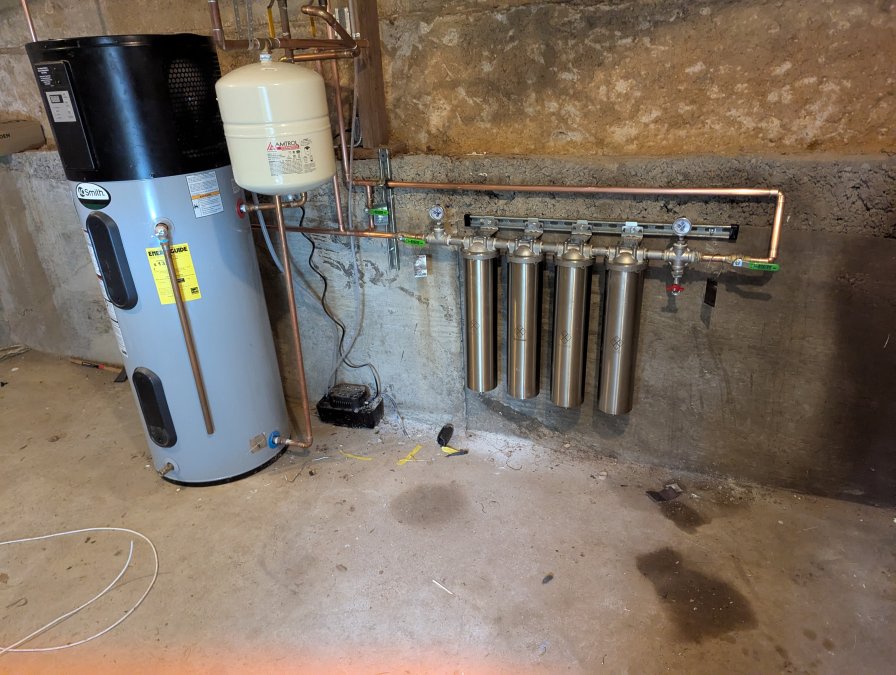
The ALPHA-3 Well Water Filtration System from Custom Fabricated Filters LLC earns our top recommendation because it addresses the full chemistry of well water rather than treating iron as an isolated problem. This three-stage whole house system is custom hand-built in the U.S.A. and calibrated for your water through the C.L.E.A.R.™ Water Intelligence System.

Stage one uses a 20-micron pleated sediment cartridge to remove dirt, sand, rust, silt, and clay. Stage two employs a Custom Radial Flow Blend, and stage three adds a dedicated iron reduction blend targeting your specific iron concentration. Each cartridge set is hand picked and custom calibrated for your home.
The system is designed for homes with well water, and the replacement cartridge set, the ALPHA-3 Well Water Cartridge set, includes everything needed for routine maintenance. For households that also struggle with hard water scale, the ALPHA-4 Well Water Cartridge set adds a softening stage that reduces hardness.
Stainless Steel Water Filtration Benefits Over Plastic
The material your system is built from matters as much as the media inside it. Plastic housings dominate because they are cheap and lightweight, but they crack under pressure fatigue, develop micro-cracks that harbor bacteria, and degrade from chlorinated water and UV light.
Stainless steel water filtration benefits begin with durability. Surgical Grade Stainless Steel Water Filtration Systems resist cracking, pressure fatigue, and contamination under demanding conditions where plastic fails. For well water applications, this translates into reliability: a system still performing decades from now without the stress fractures that send plastic units to the landfill.
Plastic filter housings shed microscopic particles into the water stream as they age. A stainless steel system eliminates this contamination source entirely, which matters for homeowners who chose well water to avoid municipal treatment byproducts.
Full-port plumbing in stainless steel systems supports higher flow than the restricted internal diameters common in plastic housings, meaning less pressure drop and better performance during peak demand.
| Feature | Plastic Housing | Stainless Steel Housing |
|---|---|---|
| Lifespan | 5-10 years typical | Decades with proper care |
| Pressure Fatigue | Cracks over time | Resists structural stress |
| Contamination Risk | Microplastics shed | No plastic contact |
| Flow Performance | Restricted ports | Full-port design |
| Upgrade Path | Replace entire unit | Add filtration stages |
Installation, Maintenance, and Troubleshooting
Professional installation is recommended for whole house iron filtration systems because proper integration requires assessing flow rates, pressure, and water line layout. A master plumber will also verify correct sizing for your well pump and position bypass valves for maintenance access. For complex water chemistry situations, a Custom Built Water Filtration System designed around your specific lab results ensures every stage is properly matched to your iron concentration and flow requirements.
DIY vs. Professional Installation: The Real Cost-Benefit
The upfront labor savings of DIY installation can be significant, but the long-term cost picture tells a different story. Improper installation can lead to:
- Undersized plumbing connections that restrict flow and reduce water pressure throughout the home
- Incorrect bypass valve placement that makes routine maintenance unnecessarily difficult
- Pressure gauge misreading that leads to premature cartridge replacement or missed clog warnings
- Voided warranty coverage, most manufacturers require certified installation for warranty validation
A common DIY pattern is the “it worked for six months” failure: the system performs well, then staining returns. The homeowner replaces cartridges at significant expense, only to discover the real problem was an improperly seated O-ring or a bypass valve left partially open.
For most homeowners, professional installation is the wiser investment. The labor cost is a small fraction of the total investment, and a qualified installer will pressure-test the system, verify flow rates, and document the installation for warranty purposes.
The Maintenance Schedule That Keeps Iron Out
Routine maintenance centers on cartridge replacement. The sediment cartridge typically needs replacement every 3-6 months depending on water quality, while the iron reduction media lasts longer. The Alpha Sediment Cartridge and the Alpha Softner Cartridge swap out without special tools.
Skipping scheduled cartridge changes is the most common cause of system failure. A clogged sediment cartridge forces water through the iron reduction media at higher velocity, reducing contact time and allowing iron to pass through untreated. Set a calendar reminder and keep replacement cartridges on hand.
Troubleshooting: When Iron Stains Persist After Installation
You installed the system, changed cartridges on schedule, and rust-colored stains still appear. Before assuming the system is defective, work through this diagnostic sequence:
1. Check the bypass valve. The most common post-installation issue is a bypass valve not fully closed. Even a partially open bypass allows untreated water to blend with filtered water, enough to cause staining while the system appears to work. Verify the valve is fully closed and the handle is seated correctly.
2. Verify pressure differential. Most systems include pressure gauges before and after the filter housings. A drop of more than 10-15 psi indicates the sediment cartridge is loaded and needs replacement. Running with a clogged sediment stage forces water through the iron media at excessive velocity, reducing contact time and allowing dissolved iron to pass through.
3. Re-test your water. Well chemistry changes over time. If your system was calibrated for 3 ppm of iron and your aquifer now delivers 6 ppm, the media will be overwhelmed. Annual testing catches this shift before staining becomes visible.
4. Inspect for iron bacteria. If staining appears in clumps or slimy deposits rather than uniform discoloration, iron bacteria may be present. Standard media capture oxidized particles but do not kill bacteria. Well disinfection is typically required before filtration can work effectively.
5. Confirm the ferrous/ferric split. If your water shifted from mostly ferric (red water) toward ferrous (clear water) iron, the mechanical stages will no longer capture the dissolved iron passing through. This requires a media change, not just a cartridge replacement.
The Sediment Load Problem
Common post-installation issues trace back to inadequate pre-filtration. If you notice reduced pressure shortly after installation, your well’s sediment load exceeds what the primary stage can handle. Wells in sandy aquifers or with deteriorating casings can clog a 20-micron cartridge in weeks rather than months.
Adding a dedicated pre-filter protects your investment and extends cartridge life. A 50-micron or 100-micron disposable pre-filter captures the largest particles before they reach finer stages, dramatically extending the service life of your primary sediment cartridge. This is particularly important for older wells or those known to produce sandy water.
For households with very high iron concentrations, periodic testing after installation confirms the system is performing to specification. Annual testing catches emerging issues before they cause staining.
Keep a maintenance log. Record the date of each cartridge change, the pressure readings before and after the system, and any changes in water quality you notice. This log becomes invaluable when troubleshooting intermittent issues, patterns that are invisible month-to-month become obvious when you can review a year of data.
Conclusion: Choose a System Built for Your Water
The best water filtration for well water iron is not the cheapest unit or the most aggressively marketed brand. It is the system engineered around your specific water chemistry, built from materials that will not degrade into your drinking water, and designed as permanent infrastructure rather than a disposable appliance.
Custom Fabricated Filters LLC builds whole house systems from 100% surgical-grade stainless steel, calibrated through the C.L.E.A.R.™ Water Intelligence System to match your well’s specific iron type, concentration, and companion contaminants. Every system is hand built by master plumbers, backed by a lifetime warranty, and designed to be upgradeable as your needs evolve.
ANALYZE MY WATER FOR FREE to get a system recommendation based on your actual water test results, not a generic guess.
Frequently Asked Questions
What is the best way to filter iron out of well water?
The best way depends on your water chemistry. For ferrous (clear-water) iron, a whole house system with specialized iron-reduction media works well. For ferric (red-water) iron, sediment pre-filtration is critical. A system like the ALPHA-3, which combines sediment and custom radial flow iron-reduction stages, addresses both types in one unit. Always start with a comprehensive water test to measure iron concentration, pH, and hardness before choosing a system. This ensures the filter media matches your specific contaminant load.
What are the signs of high iron in well water?
Common signs include reddish-brown or orange staining on sinks, tubs, and laundry. You may also notice a metallic taste in the water or a foul odor. Ferric iron makes water appear cloudy or red, while ferrous iron is dissolved and clear, but stains once it oxidizes. If you see these signs, test your water to determine the exact iron type and concentration. This information is essential for selecting the right filtration media and system size.
How often do I need to maintain an iron filtration system?
Maintenance frequency depends on your water quality and system type. For cartridge-based systems like the ALPHA series, you typically replace sediment and carbon cartridges every 6 to 12 months. If you have high iron levels, you may need to change the iron-reduction cartridge more often. A water test during each cartridge change helps track media performance. Stainless steel housings require no replacement, unlike plastic units that can crack and need full replacement every few years.
Do I need a professional to install an iron filtration system?
Installation complexity varies. A basic cartridge system may be a DIY project if you have standard plumbing skills and tools. However, a professional installation is recommended to ensure proper flow rates, correct bypass valves, and secure connections. If you have complex plumbing, a master plumber can ensure the system is configured correctly for your home’s layout and your well pump’s capacity. This prevents pressure drops and performance issues.