Last Updated: November 18, 2026
Quick Summary
To maintain a whole-house water filter, replace sediment and carbon cartridges every 3 to 6 months, clean reusable screens every 1 to 3 months, and inspect O-rings yearly. Shut off supply and relieve pressure before every cartridge change, and track pressure readings monthly to catch clogging early.
- Pressure drop at multiple fixtures is the number one symptom of a clogged filter.
- Time a quart fill monthly; rising fill time means the cartridge is loading up.
- Never open a pressurized housing; close the shutoff valve and bleed the line first.
- Lubricate and seat the new O-ring, since a dry O-ring pinches and leaks.
- A gradual pressure decline over weeks almost always means the cartridge is loading up.
Table of Contents
- Why Whole-House Water Filter Maintenance Matters
- Signs Your Whole-House Water Filter Needs Attention
- Building a Whole-House Water Filter Replacement Schedule
- How to Change a Whole-House Water Filter Cartridge Safely
- Your Whole-House Water Filter Maintenance Checklist
- Whole-House Water Filter Troubleshooting: Pressure, Taste, and Leaks
- Order Replacement Cartridges and O-Rings for Your System
- Frequently Asked Questions
Why Whole-House Water Filter Maintenance Matters
A whole-house water filter is only as good as the upkeep behind it. Skip the maintenance, and a system that should last decades starts losing pressure, breeding bacteria, and passing contaminants straight to your taps. Systems built from surgical-grade stainless steel are designed to be permanent infrastructure, but only if they are serviced.
Here is the part most guides get wrong. They treat maintenance as a chore you do when something breaks. In reality, it is a fixed schedule that prevents the break in the first place. The EPA’s guidance on private well testing makes the same point about water quality: you check on a rhythm, not a hunch.
A well-kept system is more likely to keep delivering steady water pressure, consistent taste and clarity, and a filter housing that seals tight over time.
If you want the bigger picture of what these systems protect, our whole home water filtration systems overview shows the full range of options.
Signs Your Whole-House Water Filter Needs Attention
The clearest sign a whole-house water filter needs attention is a drop in water pressure at multiple fixtures at once. Other signals include odd tastes, cloudy water, visible sediment, and a cartridge that looks dark or matted when you open the housing.
Watch for these in your home:
- Faucets that trickle where they used to blast
- Water that smells earthy or metallic
- Fine grit in the bottom of a glass
- A filter housing that takes longer to fill
Pressure Drop and Clogged Filter Symptoms
Pressure loss is the number one symptom of a clogged filter. As sediment and carbon collect on the cartridge, water has less room to pass through. The pump or supply pushes harder, but the flow at the tap slows.
What most people miss is that pressure drop is gradual. You adapt to it without noticing. A simple check fixes that: fill a quart container at the kitchen sink and time it. Repeat monthly. When the fill time climbs, the cartridge is loading up.
Building a Whole-House Water Filter Replacement Schedule
A whole-house water filter replacement schedule should match your water source, your cartridge type, and your actual water use, not a generic calendar. City water and well water load cartridges at very different rates, and a household of two stresses a filter far less than a family of five with a garden hose running all summer. The right interval is the one your system tells you it needs.
Start with filter-specific baselines, then adjust based on what you observe:
| Filter Type | Baseline Interval | Key Adjustment Factors |
|---|---|---|
| Sediment cartridge (5-20 micron) | Every 3 to 6 months | Heavy sediment or iron in well water can cut this to 4-8 weeks; clean city water may stretch to 9 months |
| Carbon block or granular carbon | Every 3 to 6 months | High chlorine or chloramine levels, or noticeable taste/odor breakthrough, signal earlier change |
| Specialty media (iron reduction, taste/odor) | Every 6 to 12 months | Media exhaustion depends on contaminant load; test water periodically to confirm performance |
| Reusable or cleanable sediment screens | Clean every 1-3 months | Inspect for tears or clogging; replace if damaged |
| O-rings and seals | Inspect yearly; replace if worn | Cracks, flattening, or hardness call for replacement regardless of age |
Treat these as starting points, not law. Well water with visible sediment often loads cartridges faster than the label suggests, while municipal water may last the full interval. Log your change dates and note pressure readings so the pattern becomes obvious. If you notice pressure dropping before the interval is up, the filter is telling you something, listen to it.
Watch out: stretching a cartridge past its capacity can allow contaminants to pass through or cause the media to compact and restrict flow, so when in doubt, change it out.
How to Change a Whole-House Water Filter Cartridge Safely
Changing a whole-house water filter cartridge safely means shutting off supply, relieving pressure, draining the housing, and resealing with a fresh O-ring. Rushing any of those steps leads to leaks, water damage, or a housing you cannot reopen next time.
Follow these steps in order:
- Shut off the supply. Close the main shutoff valve feeding the filter.
- Open a downstream tap. This releases line pressure before you touch the housing.
- Depressurize and drain. Use the system’s pressure relief button if it has one. Otherwise open the housing slowly over a bucket.
- Remove the old cartridge. Twist the sump free and lift the cartridge out.
- Clean the housing. Wipe the sump and housing interior with a mild solution. Rinse well.
- Lubricate and seat the new O-ring. A dry O-ring pinches and leaks.
- Install the new cartridge. Match it to your water source.
- Reseal and restore. Hand-tighten the sump, close the tap, reopen the supply slowly, and check for leaks.
Shutting Off Supply and Depressurizing the Housing
Never open a pressurized housing. Water under pressure can spray, and a stuck sump can crack if you force it. Close the shutoff valve first, then open a cold tap nearby to bleed the line. Wait until the flow stops before you reach for a wrench.
If the sump will not budge, do not muscle it. That is how plastic housings crack. A strap wrench and steady pressure work better than force.
When you are ready to swap parts, our DIY cartridge replacement page lists the exact cartridge for your system. Keep a spare Alpha canister O-ring set on hand so every change ends with a clean seal.
Your Whole-House Water Filter Maintenance Checklist
A whole-house water filter maintenance checklist keeps the small jobs from becoming big repairs. Run through it monthly, quarterly, and yearly so nothing slips.
Monthly:
- Time a quart fill at one tap and note any slowdown
- Check for drips around the housing and fittings
- Look at water clarity in a clear glass
Every 3 to 6 months:
- Replace sediment and carbon cartridges
- Clean the sump and housing interior
- Inspect O-rings for cracks or flattening
Yearly:
- Do a full leak inspection of all connections
- Review your change log for patterns
- Test your water source if anything tastes off
This rhythm is the whole game. Systems that get this attention rarely surprise their owners.
Whole-House Water Filter Troubleshooting: Pressure, Taste, and Leaks
Whole-house water filter troubleshooting starts with one question: did the problem appear suddenly or build over time? Sudden issues usually trace to a valve, a seal, or a recent change. Gradual issues point to a loading cartridge. Use this symptom-to-cause chart to narrow down the likely culprit before you reach for a wrench.
| Symptom | Likely Cause | First Check |
|---|---|---|
| Low pressure at all fixtures | Clogged cartridge or partially closed valve | Replace cartridge; verify all valves are fully open |
| Low pressure at one fixture | Aerator or fixture issue, not the filter | Clean or replace the aerator; check the fixture’s supply line |
| Bad taste or odor | Spent carbon cartridge | Replace carbon filter; if problem persists, test water for new contaminants |
| Grit or sediment in water | Torn or bypassed sediment filter | Inspect cartridge for tears; ensure it is seated correctly |
| Leaks at the housing | Worn O-ring or overtightened sump | Shut off supply, inspect O-ring, reseat or replace |
| Cloudy water | Air in lines or fine sediment passing through | Flush system; check cartridge integrity |
| Water looks discolored | Rust or sediment disturbance | Flush lines; inspect and replace sediment filter |
For leaks, shut off supply and inspect the O-ring first, a dry or cracked O-ring is the most common cause. For pressure problems, check the cartridge before you suspect the plumbing. A gradual pressure decline over weeks almost always means the cartridge is loading up, while a sudden drop suggests a valve was bumped or a seal failed.
Watch out: if you replace the cartridge and pressure does not recover, the problem may be upstream, a clogged supply line, a failing pressure regulator, or sediment buildup in the plumbing itself. Our guide to housing failure prevention tips walks through spotting fatigue before it becomes a flood. Well owners should also read the well water filtration troubleshooting guide, which covers pressure drops, odors, and filter failures step by step.
Order Replacement Cartridges and O-Rings for Your System
The right replacement filter keeps your whole-house water filter performing like new. A wrong-fit cartridge wastes money and can bypass water around the media, which defeats the purpose entirely.
Match these to your system and water source:
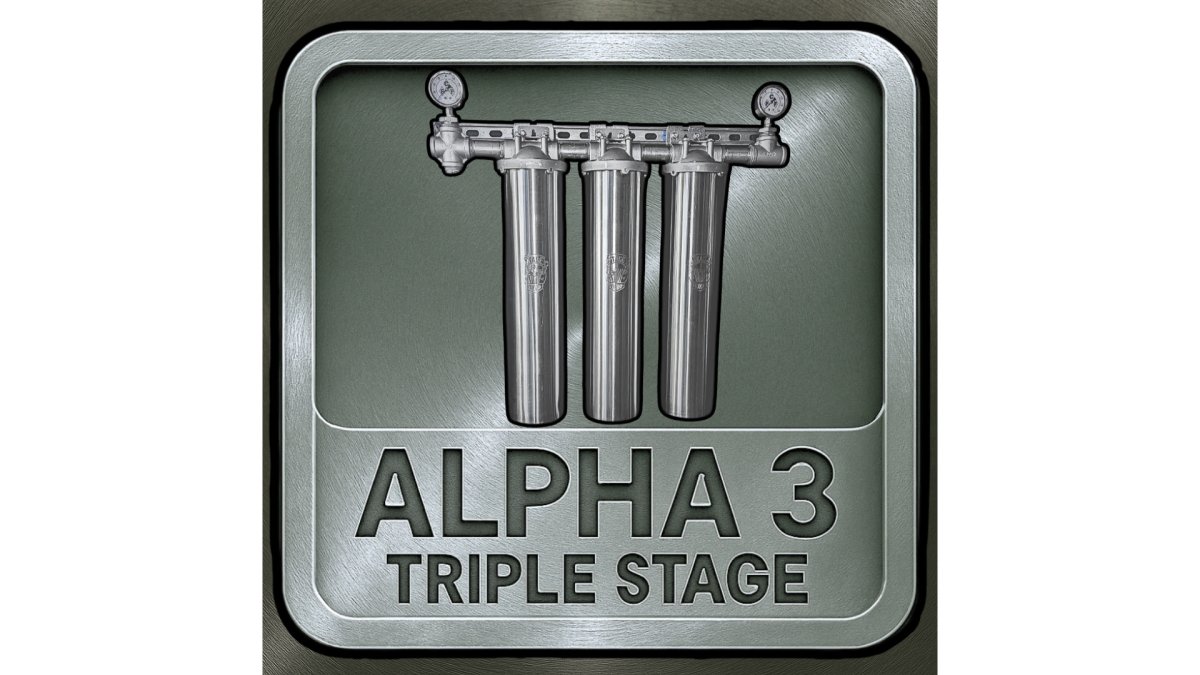
- City water: the ALPHA-3 City Water Cartridge set, calibrated through the C.L.E.A.R.™ Water Intelligence System
- Well water: the ALPHA-3 Well Water Cartridge set, which includes iron reduction
- Seals: the Alpha canister O-ring set, priced per canister
Buying the correct parts is half of good maintenance. The other half is doing it on schedule. Stainless steel housings are a durable alternative to plastic, and a steady maintenance habit supports that long service life.
Maintenance is what turns a good system into a permanent one. If you are unsure what your water needs, start there before you buy a single cartridge. Custom Fabricated Filters LLC builds each system around your actual water, with surgical grade stainless steel water filtration systems construction, full-port flow design, and a lifetime warranty. Get your water analyzed first, then let the results drive the plan. Get started with Custom Fabricated Filters LLC.
Frequently Asked Questions
How often should you replace your whole-house water filter?
Most sediment and carbon cartridges last three to six months, while well-water systems with iron or heavy sediment may need changes every three months or sooner. City water systems often run closer to the six-month mark. Track pressure drop and taste changes rather than relying on the calendar alone, and log each cartridge change so the next interval is based on your actual water, not a generic estimate.
Can I replace a whole-house water filter cartridge myself?
Yes. A cartridge change is a homeowner-level task if you have a filter wrench, a bucket, and a shutoff valve on both sides of the housing. Shut off the supply, open a downstream faucet to depressurize, drain the housing, swap the cartridge, lubricate the O-ring, and restart slowly while checking for leaks. If your system is hard-piped without isolation valves, have a plumber add them first so future changes stay simple.
Can bacteria grow in water filters?
Yes. Carbon cartridges can harbor bacteria if water sits stagnant in the housing for long periods, which is why manufacturers specify replacement intervals and why sanitizing the housing during a cartridge change matters. Systems that sit unused for weeks, such as seasonal homes, are the highest risk. Flush the system after any long idle period and follow the sanitizing steps in your maintenance checklist.
What are the downsides of installing a whole-house water filter?
The main downsides are upfront cost, the need for periodic cartridge changes, and pressure drop if the system is undersized or the filter is clogged. Plastic housings can also crack under pressure fatigue over time, while stainless steel is a durable alternative. Budget for replacement cartridges and a few minutes of maintenance every few months.