Last Updated: October 23, 2026
Quick Summary
Planning water infrastructure for property development begins with a defensible demand estimate based on land use and a verified supply picture that determines system size, capacity, and long-term viability. This assessment must include peak simultaneous demand, fire-flow requirements, utility capacity verification, and worst-case seasonal conditions before land acquisition or entitlement.
- Calculate demand using fixture units for residential or occupancy factors for commercial projects, then apply utility peaking factors and fire-flow requirements.
- Request written capacity confirmation from the utility showing available flow and residual pressure at your proposed connection point before closing.
- Verify groundwater supply with sustained yield testing, seasonal data, and water quality sampling if wells are contemplated.
- Coordinate water planning with stormwater, wastewater, and site drainage systems to prevent conflicts and improve overall site efficiency.
- Sequence approvals across four phases: feasibility, entitlement, construction documents, and commissioning, with each phase producing documents the next depends on.
Table of Contents
- Assess Your Site’s Water Demand and Supply Capacity
- Integrate Water Planning with Land-Use and Comprehensive Planning
- Evaluate Drinking-Water System Capacity Development
- Design Water Utility Capacity Planning and Infrastructure
- Coordinate with Utilities, Agencies, and Permitting Requirements
- Select Industrial Filtration Equipment and Commercial Water System Design Standards
- Plan Construction, Commissioning, and Operational Handover
- Frequently Asked Questions
Assess Your Site’s Water Demand and Supply Capacity
Planning water infrastructure for property development begins with a defensible demand estimate and a verified supply picture. This assessment determines system size, capacity, and long-term viability, and it is the step most likely to derail a project if handled with rules of thumb alone.
Build a demand estimate from land use, not from averages
Start by translating your program into demand.
For commercial and industrial projects, demand is tied to operations: manufacturing processes, food service, cooling systems, or facility operations all have distinct consumption profiles.
Apply a peaking factor. Utilities typically design to a maximum-day and peak-hour demand derived from average-day use multiplied by factors published in their design criteria.
Do not forget fire flow. Fire suppression demand is often the single largest driver of main size and storage.
Verify supply and connection capacity before you commit
Determine whether you will connect to a municipal system, rely on groundwater, or use alternative sources. For municipal connections, request a capacity assessment and, critically, a hydraulic model run at the proposed connection point showing residual pressure under peak-hour plus fire-flow conditions.
For groundwater, well yield testing should include a sustained pumping test, not a short drawdown check, plus seasonal fluctuation data and water quality sampling. A well that passes in spring may fail in late summer; build the assessment around worst-case seasonal conditions.
Request written capacity confirmation from the utility before land acquisition or entitlement. Verbal assurances do not survive a change in utility staff or a capacity moratorium.
Document seasonal and worst-case conditions
Water demand and availability shift significantly between seasons. Landscape irrigation, cooling loads, and tourism or occupancy patterns can push summer demand well above annual averages, while drought conditions can reduce source availability at the same time. Size infrastructure for the worst-case coincidence of high demand and constrained supply, not for average conditions.
A due-diligence checklist you can run before closing
- Demand estimate by land use with fixture-unit or occupancy-factor backup, including peaking factors and fire flow.
- Utility capacity letter stating available flow, residual pressure, and any upgrade obligations at the proposed connection point.
- Groundwater: sustained yield test, seasonal data, and water quality panel if wells are contemplated.
- Seasonal worst-case demand and supply scenario documented.
- Written confirmation of who pays for any off-site main, storage, or treatment upgrades.
Integrate Water Planning with Land-Use and Comprehensive Planning
Water infrastructure planning must align with your overall land-use strategy and local comprehensive plans. This integration prevents costly redesigns and ensures regulatory approval.
Review your municipality’s comprehensive plan and land-use zoning. These documents establish water service areas, growth projections, and infrastructure development timelines.
Coordinate water planning with stormwater management, wastewater collection, and site drainage. These systems are interdependent.
Engage with planning staff early. Local planners understand capacity constraints, future expansion plans, and approval timelines that aren’t always public.
Evaluate Drinking-Water System Capacity Development
Municipal drinking-water systems have finite capacity. Before committing to a development timeline, verify that the system can serve your project without compromising service to existing customers.
Contact your water utility and request a capacity assessment for your site. Provide projected demand, connection point, and timeline.
Understand upgrade requirements and costs. If the utility lacks sufficient capacity, they may require you to fund system improvements as a condition of service.
For projects in areas with limited capacity, explore demand reduction strategies.
Design Water Utility Capacity Planning and Infrastructure
Your infrastructure design must match utility capacity, anticipated demand, and long-term growth. This is where planning translates into physical systems.
Size your main water line based on peak demand, not average consumption. Learn key components and high-flow design principles that align with your utility infrastructure planning. Understand how to calculate flow rate for your water system using the GPM formula to right-size your infrastructure.
Plan for growth. If your development may expand later, additional buildings, increased occupancy, or new operations, design infrastructure to accommodate that growth without complete replacement.
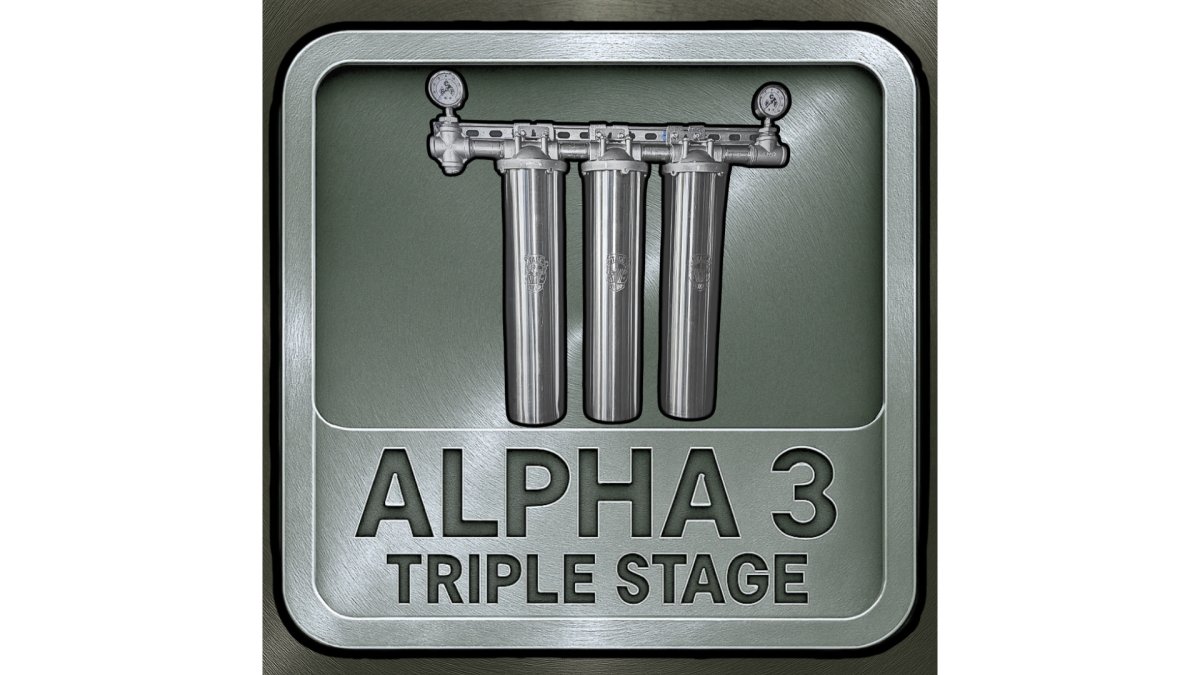
Select filtration equipment matched to your water quality and demand. Custom Built Water Filtration Systems engineered for permanent infrastructure provide superior durability compared to disposable alternatives. Our Surgical Grade Stainless Steel Water Filtration Systems resist cracking, pressure fatigue, and contamination while maintaining structural integrity under demanding conditions, ensuring your system performs reliably as your property develops and demand evolves.
Position treatment and storage facilities strategically. Treatment plants should be accessible for maintenance but isolated from occupied areas.
Coordinate with Utilities, Agencies, and Permitting Requirements
Water infrastructure development requires approvals from multiple agencies, and the sequence matters as much as the submissions. This section maps the approvals by project phase so you can build a realistic schedule instead of discovering dependencies at the eleventh hour.
Map the agencies and what each controls
Identify every agency with jurisdiction and note what each one actually approves:
- Municipal water utility, capacity commitment, connection point, meter size, and any off-site main or storage upgrades.
- Wastewater utility or sanitary district, collection capacity, connection permit, and pretreatment requirements if your use is industrial.
- Environmental protection or state environmental agency, source approvals, discharge permits, and environmental review triggers.
- Public health department, water quality and, where applicable, well construction and treatment approval.
- Building and fire officials, plumbing permits, fire-flow verification, and backflow prevention.
- Regional water authority or special district, service-area boundaries and wholesale capacity where one exists.
Sequence approvals by project phase
A common pattern is to run approvals in four phases, with each phase producing documents the next phase depends on:
- Feasibility and due diligence. Obtain the utility capacity letter, fire-flow data, and any environmental constraints before land acquisition. This phase answers whether the site can be served at all.
- Entitlement and concept design. Submit the demand calculation, utility will-serve commitment, and preliminary utility plan with the entitlement package. Confirm service-area inclusion and any water-neutral or demand-reduction conditions the jurisdiction imposes.
- Construction documents and permits. Submit engineered utility plans, hydraulic calculations, and treatment specifications for plumbing and utility permits. Coordinate utility plan review with building permit review so one does not hold up the other.
- Construction and commissioning. Schedule utility inspections, connection, and disinfection or water-quality testing, and obtain the utility’s acceptance before occupancy.
Utility capacity reviews, environmental assessments, and construction permits follow different clocks. Some require sequential approvals; others can run in parallel. Ask each agency for its realistic review time and stated dependencies in writing, then build the schedule around the longest chain.
Prepare a submission package that survives first review
Agencies require detailed plans showing demand calculations, supply sources, treatment processes, capacity analysis, and operational procedures. Incomplete submissions are the most common cause of delay. Assemble a standard package: demand calculation with assumptions, utility capacity correspondence, hydraulic calculations, treatment specifications, site utility plan, and a narrative of operational procedures. Work with engineers familiar with the jurisdiction’s requirements so the submission meets the local format on the first pass.
Coordinate across agencies, not just with each one
Water, wastewater, stormwater, and fire protection are reviewed by different desks but interact on the same site. Hold a pre-submittal meeting with the utility and the planning department together where possible, and circulate a single utility coordination matrix showing every agency, its required submission, its review time, and its approval milestone. When one agency raises a concern, insufficient capacity, water quality, or a design conflict, resolve it collaboratively and early rather than at final review.
The developers who avoid schedule shocks treat agency coordination as a phase-by-phase deliverable with written commitments at each gate, not as a permitting task that begins after design is complete.
Water infrastructure approvals follow a predictable sequence across four project phases, with each phase producing documents the next phase depends on.
| Phase | Key Deliverables | Purpose |
|---|---|---|
| Feasibility and due diligence | Utility capacity letter, fire-flow data, environmental constraints | Confirm site can be served |
| Entitlement and concept design | Demand calculation, will-serve commitment, preliminary utility plan | Establish service area and conditions |
| Construction documents and permits | Engineered utility plans, hydraulic calculations, treatment specifications | Obtain plumbing and utility permits |
| Construction and commissioning | Utility inspections, connection, water-quality testing, utility acceptance | Verify performance before occupancy |
Select Industrial Filtration Equipment and Commercial Water System Design Standards
The filtration system you select determines water quality, system reliability, and long-term maintenance requirements. This choice affects both initial infrastructure and operational costs.
For commercial and industrial applications, system design must meet applicable water quality standards and support your operational requirements. Treatment needs vary widely: some operations require minimal filtration, while others need multi-stage systems to remove specific contaminants.
Filtration system specifications for new development
Specify filtration systems based on water quality testing and operational needs. Test your source water, municipal supply or groundwater, to identify contaminants requiring treatment.
Design for full-port plumbing that supports higher flow performance without pressure loss. Review certifications and quality standards that ensure filtration systems meet regulatory and infrastructure requirements.
Plan for maintenance access and filter replacement. Systems should be located where service technicians can work safely and efficiently.
Document all specifications in your infrastructure plans. Agencies and future operators need clear documentation of treatment objectives, filtration stages, media types, and maintenance procedures.
Plan Construction, Commissioning, and Operational Handover
The transition from design and construction to operation determines whether your infrastructure actually delivers the performance you planned.
Develop a construction schedule coordinated with utility work, building construction, and agency inspections.
Plan commissioning procedures before construction begins.
Prepare operational documentation for facility managers. Include system design drawings, equipment specifications, maintenance procedures, troubleshooting guides, and emergency contact information.
Train facility staff on system operation and maintenance. Even well-designed systems require proper operation to deliver consistent performance.
Water infrastructure planning requires coordinating demand assessment, regulatory compliance, utility capacity, system design, and operational readiness. Our surgical-grade stainless steel construction ensures your system performs reliably throughout your property’s lifecycle. ANALYZE MY WATER FOR FREE to understand your specific filtration needs and explore how we can support your development project with infrastructure built to last.
Frequently Asked Questions
What are the key steps in planning water infrastructure for a new property development?
Start with a site assessment to determine water demand based on building types and occupancy. Verify drinking water supply availability and system capacity with your local utility. Coordinate with land-use planners and water agencies early to align infrastructure with comprehensive planning. Design your water infrastructure to meet both immediate and long-term demand, then secure permits and approvals before construction. Finally, commission systems and conduct handover testing to ensure quality and compliance before operations begin.
How do I calculate water demand for a new commercial property or development?
Water demand depends on building type, occupancy, and operational use. Commercial facilities typically require higher flow rates than residential properties. Work with your utility and a water planning professional to estimate demand based on proposed land use, number of occupants, and industrial processes if applicable. Document these estimates in your comprehensive planning submission. This calculation drives your infrastructure sizing and helps utilities assess their system capacity to serve your development.
What role does coordination between developers, utilities, and water agencies play?
Early coordination prevents costly redesigns and delays. Utilities must confirm they have drinking water system capacity and wastewater treatment capacity to serve your project. Water agencies review your land-use plans and infrastructure design against comprehensive planning requirements. Permitting authorities verify compliance with water management and discharge standards. Starting these conversations during feasibility prevents conflicts during design and construction, and ensures your infrastructure integrates smoothly with existing systems.
Why is selecting durable water filtration equipment important for new property development?
Commercial water system design standards require filtration that resists contamination and maintains structural integrity over decades. Industrial filtration equipment built from surgical-grade stainless steel eliminates microplastic exposure and handles higher flow rates without pressure fatigue. Unlike plastic systems, permanent stainless steel infrastructure supports long-term property value, reduces maintenance costs, and adapts as water conditions or demand change. This durability is especially critical for developments serving multiple buildings, businesses, or industrial processes where system failure affects operations and revenue.